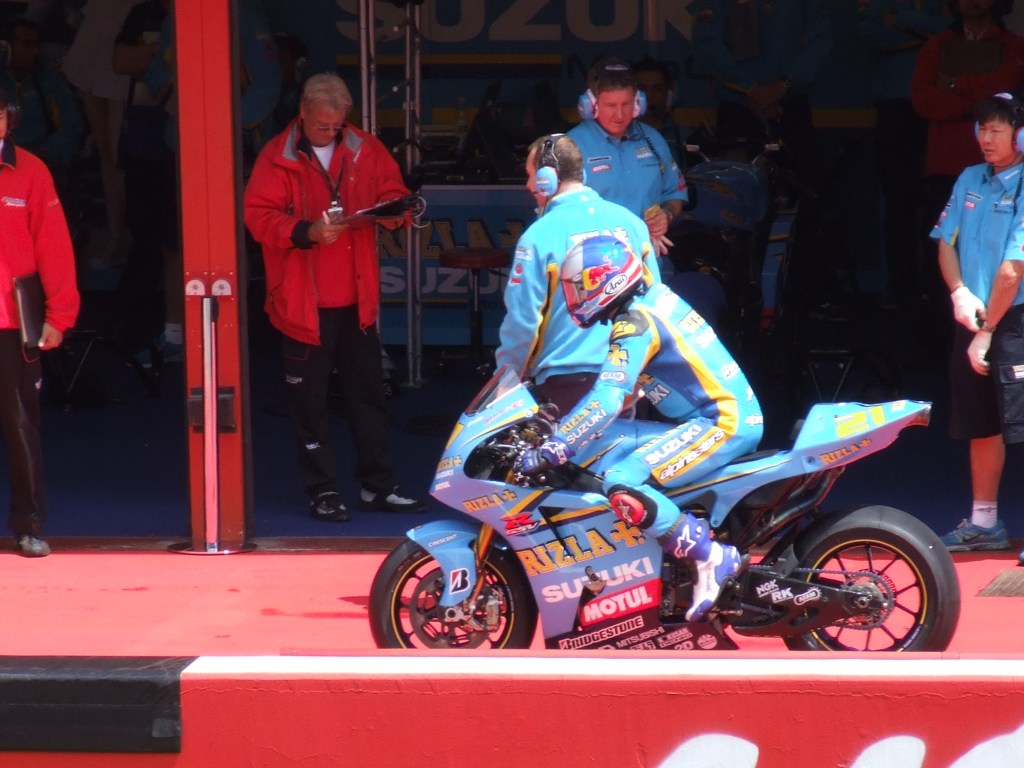
EXCLUSIVE: Motorsport journalist Valentin Khorounzhiy explains why motorcycle racing remains a clandestine world of intuition and how a data revolution is just around the corner.
By Abhishek Ramesh
Well before humans ‘blessed’ themselves with AI, the motorsport realm was rife with data overload. And fans perceived it that way.
According to Valentin Khorounzhiy, who covers both MotoGP and F1, when it comes to statistical nuance, the two-wheeled premier class doesn’t yet operate on the same wavelength as its counterpart Liberty Media offering.
Several outlets break down F1 drivers’ live telemetry after each session. But what about riders doing well over 350 km/h (~220 mph) on 300 horsepower prototypes worth millions of dollars, with nothing but their airbag-activated leather suits between glory and gravel?
“Live telemetry is not made available to us and won’t be anytime soon. That’s not just how that championship works relative to F1. You’ll see how clandestine everything is,” says Khorounzhiy.
But this must not be mistaken as an access issue alone.
He adds, “Less accessible implies there’s this massive effort to get more access to data, but I’ve not really observed that in my time in the paddock. So it’s less accessible, but also because there’s less demand.
“The one thing that MotoGP increasingly cares about right now that it didn’t 10 years ago, or at least not publicly, is front tyre pressures, because that’s the part where the penalty is going to be ruinous to your race outcome.”
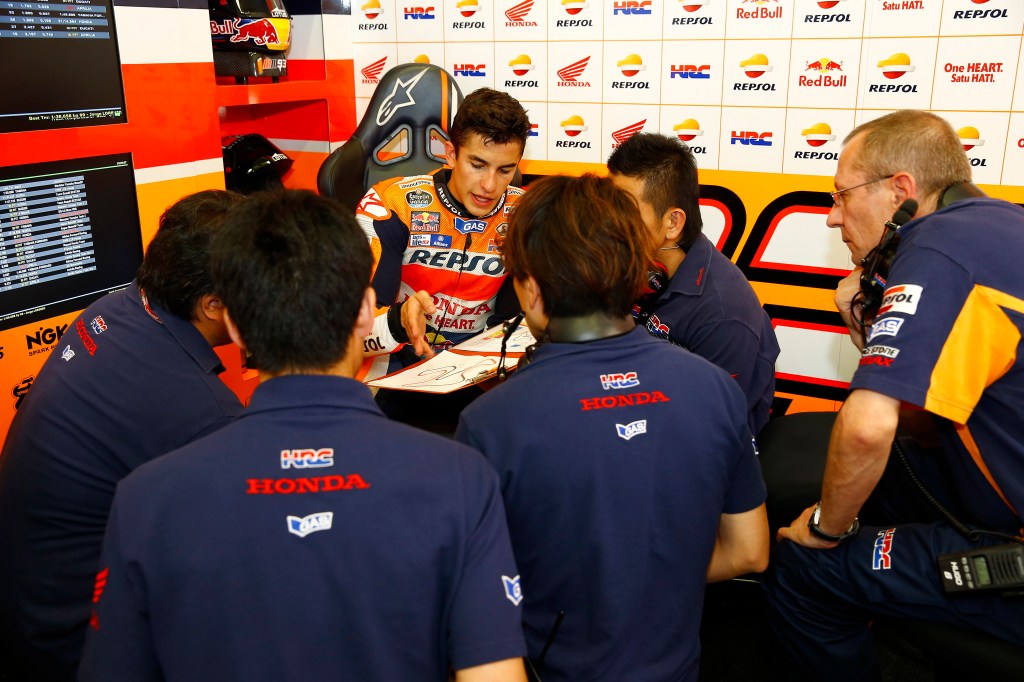
Even information this vital to the overall race result is inadvertently bound by secrecy.
Khorounzhiy explains, “That data has to wait until post-race for a whole bunch of analysis to happen. That’s one very important component that you can’t really offer in-race to the viewers or journalists.”
It’s therefore not hugely surprising that journalists are sometimes left with no second source to corroborate what they observe in the live timings. “Often you have to just let it go,” Khorounzhiy laments.
This is why balancing the offerings to fans is a bit like building a motorcycle for peak on-track performance. Compromises have to be made. Besides, when the wheel-to-wheel action is so riveting, dialling up the data side can almost become a fool’s errand.
“You can only build so much from the numbers without having that visual accessibility, and broadcast is king. That’s where you get your revenue,” Khorounzhiy points out.
“A lot of people aren’t interested in the in-depth numbers. They’ll be a little opposed to it, even if you try to present it in more of a layman’s way or try to really chew through it.”
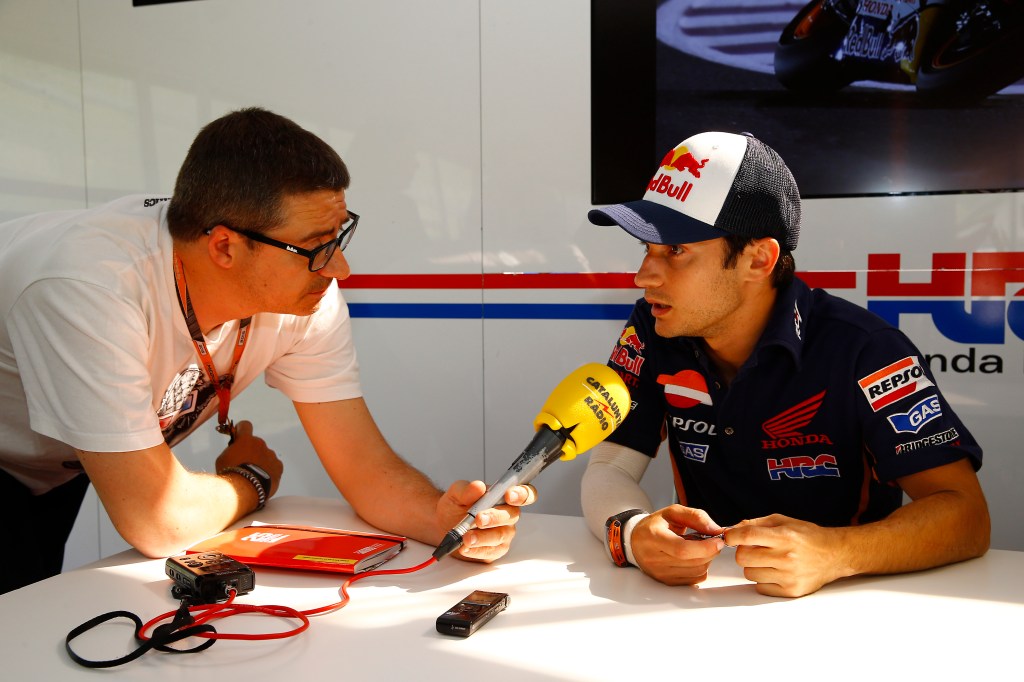
At the same time, enjoying a race and understanding the sport aren’t synonymous; technical and quantitative aptitude help in learning why and how things happen.
Khorounzhiy says, “I don’t think you can escape a surface-only understanding of the sport without numbers, a lot of numbers.”
For him, even the visual experience matters more than what meets the eye.
He continues, “In other sports, they talk about the numbers versus eye test. I’ve always believed eye test is also a kind of data. It’s just the data that your brain processes through seeing it and files in its own numerical-ish capacity.”
An elite rider needs to trust his crew and himself to get the best out of the bike. Similarly, it’s in numbers that journalists believe.
“Data means confidence; data means accuracy. Generally, the more numbers you have, you’re going to be more correct in what you do unless your methodology is completely off.”
Khorounzhiy differentiates between the kind of expertise MotoGP holds right now. “Obviously, there’s a lot of technical geniuses working there. But in terms of statistical geniuses, there are currently no Moneyballs in MotoGP,” he says.
Relative to other sports at least, “Everything in MotoGP is very feel-based, specific individual feedback on various things and it’s less systematised.”
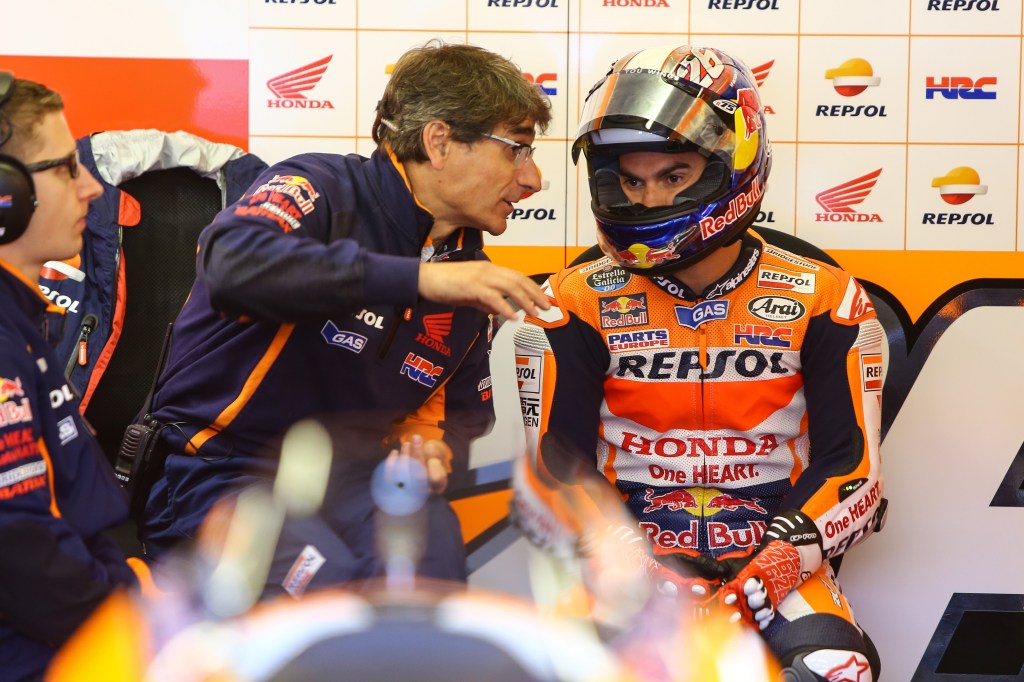
He also reminds why the status quo may only seem anecdotal: “If I was doing that work, I maybe wouldn’t share all the results.”
But Khorounzhiy believes a data uprising in MotoGP coverage is imminent.
“I think that’s a runaway train in every sport. The more data-sifting capacity there is, the more you can’t really stop it. So it’s coming for MotoGP too. It’s coming for F1,” he adds.
“I just don’t know what shape it will take. Maybe it’s not necessarily something you need to consciously work to introduce.”
A big part of the new regulations in 2027 is how all MotoGP competitors will have access to GPS data from all riders at the end of each session. Whether this is fed to the media too remains to be seen. But Khorounzhiy can already imagine teams using it as an escape hatch.
He says, “When they’re up in front of the media, the best thing to use up one or two minutes of your session time sometimes is to talk about somebody else. And if you have the GPS data to go, I think certain team bosses will very quickly incorporate that information into the messaging. Then through that, it will be distributed through media circles, regardless of what actual data is available to the media directly.”
Until that GPS loophole cracks the grid wide open, journalists will rely on their own ways to separate rider talent from machinery. Chasing this truth frequently takes the form of post-race rider rankings.
But is a systematic hierarchy with an unchanged, objective process from week to week enough to gain traction among fans? Or is a vibes-based approach more engaging?
While admitting to remaining consistent in his framework, Val reminds, “If I had some sort of model that just tells me Marc Márquez is number one every weekend, that is not very interesting to read. That would be a very interesting finding, but that would not be a very interesting repeatable finding.
“For me, the authenticity could only be objectivity. A little bit here and there of punditry is also an attempted objectivity.
“It’s very difficult for me to divorce the idea of trying to be deliberately subjective and controversial from being deliberately dishonest. Because that is a certain element of overegging things if they wouldn’t be controversial, which means this isn’t actually your true opinion.”
It’s understandable that when asked about the value of fantasy sports in motorsport coverage, Khorounzhiy prefers to keep the two divorced. While he acknowledges the value of fantasy leagues in fostering banter among fans, he warns they position the sport around artificial, results-oriented metrics rather than genuine performance analysis.
Ultimately, until the paddock fully embraces true sabermetrics, the most accurate read of MotoGP will remain exactly where it is right now: somewhere in the grey area between raw lap times, the eye test and the unrelenting pursuit of objectivity.


Leave a comment